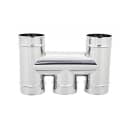

The implementation of split channel and air conditioning in Rasht is the process of designing, building and installing air transmission paths, taking into account the relative humidity of over 80% and the thermal fluctuations of Gilan. To prevent the channel from sweating in the roof and static pressure drop, the system should be implemented with a standard galvanized sheet or an anti-fungal polyurethane channel and elastomeric insulation of at least 19 mm. Adhering to the correct slope, sealing the seams with mastic and the exact alignment of the outlets in the humid areas of the north, guarantee the maintenance of the efficiency of the split duct device and increase the life of the ventilation equipment.
In the construction projects of Gilan province, air conditioning is not just cooling or heating the air; The main problem is to overcome the stable humidity of the air. A slight error in calculating the thickness of the insulation or sealing the joints can destroy the entire false ceiling in less than two seasons. By implementing dozens of projects in the urban fabric of Rasht, Mohsen's canalization workshop advances the entire canalization process based on local requirements and accurate pressure drop calculations.
Technical requirements of split duct ducting in the climatic conditions of Rasht
The air of Rasht has different physical characteristics compared to the central plateau of Iran due to high rainfall and proximity to the sea. Humid air carries more density and mass than water vapor, so the fan of the split duct device faces higher friction and pressure drop to throw air into the channel paths. In such a situation, any sudden change of direction, non-standard 90-degree bends, or non-standard cross-section changes, disrupts the flow of cold air and increases the compressor's electricity consumption by 35%.
In channel sizing calculations in Rasht, the use of constant pressure drop method (Equal Friction Method) should be accompanied by a revision of the allowed air speed. Maximum air velocity in residential main ducts should not exceed 800 to 900 feet per minute (FPM) in order to reduce wind noise in low pitched roofs as well as prevent potential drips. Observing the thickness of the sheet in accordance with the dimensions of the opening of the channel is another factor to prevent buckling and vibration of the system when starting the device.
Comparison of galvanized and polyurethane channel in humid climate
In the construction market of Rasht, there are two main options for running the channel: the traditional galvanized sheet channel and the polyurethane pre-insulated channel. Based on our field evaluations in numerous construction projects in Golsar, Manzareh and Motahari, each of these materials has a specific use and one cannot be absolutely prescribed for all structures.
Galvanized sheet is still the safest choice due to its structural strength, ability to withstand high static pressures and long mechanical life in main routes. However, the galvanized sheet in Rasht without 100% elastomeric insulation will quickly experience dew and surface distillation. On the other hand, due to the insulation in the core of the material and its light weight, the polyurethane channel has a very high running speed and absorbs wind noise, but it is more vulnerable to impact and if poor connections are made, its seams will suffer from air leakage over time.
Technical comparison table of channeling materials in Rasht
Technical parameters | Galvanized square duct with insulation | Polyurethane pre-insulated duct | Round spiral duct Galvanized |
|---|---|---|---|
Resistance to moisture and rust | Very high (with coating sheet 180 and above) | Extremely high and anti-fungal | Very high with standard coating |
Risk of surface distillation (sweating) | Zero if insulation is installed carefully | Very negligible (Closed foam construction) | Requires standard lap insulation |
Static pressure drop of the track | Moderate due to ear-ring connections | Low due to smooth internal surface | Lowest possible pressure drop |
Structural weight on false ceiling | Heavy (requires support) Strong) | Very light and no extra burden | Medium weight with quick installation |
Finished price of materials and execution | Economic and logical | Requires higher initial investment | Economy in direct routes |
Dangerous mistakes in air conditioning duct insulation
The most important factor in the return of damage and damage to the plastering and roofing of the roof in Rasht is the insulation error. When cold air with a temperature of about 12 to 14 degrees passes through the channel, the metal body gets cold. In the space behind the false ceiling where hot and humid air is still, the dew point is activated and water droplets form on the body of the channel. If the insulation is not thick enough or its seams are left open, these drops will continuously drip.
Using traditional glass wool in Rasht is a mistake. Glass wool absorbs moisture from the environment like a sponge; Over time, wet and condensed, it completely loses its thermal insulation properties and becomes a place for the growth of mold and unpleasant odor. The right choice for this climate is to use closed-cell elastomeric insulation with a thickness of at least 13 to 19 mm with a reinforced aluminum coating. The seams between the insulation rolls must be sealed with reinforced aluminum sealing tape and special elastomeric glue in such a way that even the smallest penetration of water vapor into the metal body does not occur.
The standard of manufacturing parts and pressure drop in industrial and residential canalization
The quality of manufacturing parts in the workshop directly affects the amount of noise coming out of the valves and the energy consumption of the fan. In split duct systems, the suction and discharge of the device must be designed as a fully coordinated cycle. It is seen in many residential buildings that due to the lack of space in the corridors, knees and alleys are built with a very tight turning radius. This creates strong vortex turbulence and causes a drop in ventilation in the last bedroom of the building.
To solve this challenge, Mohsen's ducting team manufactures all conversion parts, glued knees, floors and air dampers according to the SMACNA standard. In 90 degree elbows, turning vanes must be used to change the direction of the air flow without damaging it. Also, the precise design of the plenum box (Plenum Box) in the suction and discharge part of the split duct device absorbs turbulence and provides uniform pressure distribution for different branches.
Factors affecting the estimation of the cost and price of canalization in Rasht
Estimating the cost of running split duct and ventilation in Rasht depends on several key variables, and it is not accurate to determine a fixed price without checking the architectural plan. The first factor is the thickness and brand of galvanized sheet; Basic projects require standard 0.5 to 0.6 mm thick sheets from reputable factories (such as Amirkabir Kashan or Taraz steel) that have high resistance to coastal humidity. The second variable is the type of insulation used and its density, which constitutes a significant part of the cost of the material.
The third factor is the complexity of the false ceiling architecture and the number of special connections (plenum, special knees, eccentric transformations). The straighter the path, the lower the cost of construction and installation. For residential and villa projects in Gilan, the method of calculating the salary is based on the developed square meter of the consumed sheet or in the form of the length of the track along with all accessories (support, glue, screws and flanges) in order to maintain complete transparency in the contract.